[Alta] - A Human Atlas of a City of Angels - Art Foreword
Published October 2024 - Source
Foreword by Gina Kim (Professor at UCLA, Director)
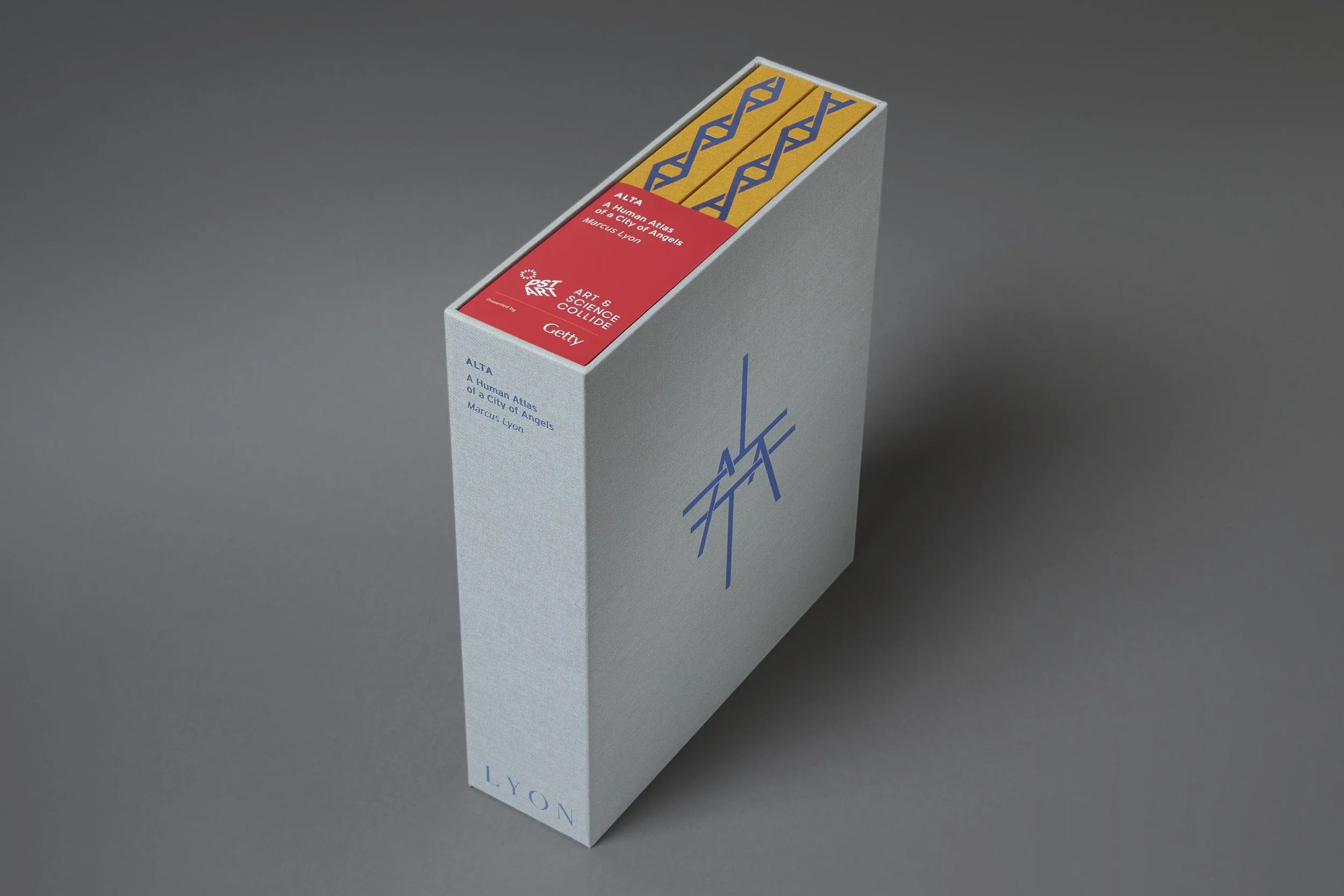
Alta / A Human Atlas of a City of Angels is a research-based exploration of social change in Los Angeles in the early twenty-first century. This social impact legacy project preserves the life stories of 100 remarkable people through photographic portraits, app-based oral histories, and ancestral DNA to create a deeper understanding of the communities of Los Angeles County. Alta holds a mirror up to society and encourages audiences to question their own roles and responsibilities towards their communities, cities, and fellow humans.
The four-year project was built on the foundations of a year-long nomination process, where a diverse group of Angelenos nominated individuals from their own communities. Each nominee has made significant contributions to LA and embodies the very best of service to society. The final 100 frame many of the most important narratives about this region of Southern California. Alta is a collaboration with the Getty Conservation Institute.
When can one genuinely assert knowledge of a city? Is it through an understanding of its geography, neighborhoods, economy, or the essence of its people? The elusive nature of Los Angeles defies easy comprehension, as it withholds its true self from immediate revelation. To the outsider, it beckons with a glittering surface, only to shatter dreams upon arrival. A silent agreement is struck with the city: surrender a piece of one’s soul for survival. Hollywood, Beverly Hills, the expansive desert, and the vast ocean challenge us to grapple with an incomprehensible world beyond ourselves. The city, in asserting its dominance, leaves us adrift, our envisioned homes unrealized.
Artist Marcus Lyon, through the lens of the Human Atlas, presents a unique and profound approach to understanding the city and establishing a sense of home. He intricately weaves together the narratives of humans and geography, introducing a scintillating concept of duality. Diverging from the limitations of a twentieth-century binary perspective, Marcus gently guides us into a nuanced understanding of duality – an alternative that transcends the divisive ‘us vs them’ avoiding the pitfalls of colonial frameworks. Pairs of concepts such as ground/space, scene/witness, sky/horizon, and hope/sanctuary create a harmonious and endless cycle of production and re-production.
As we open the two books and turn the pages in tandem, a vast ocean of faces unfolds, seamlessly paired with the Earth’s façade – a literal act of unearthing the intertwined stories of humanity and geography. In this vivid array of human faces, bodies, DNAs, and Atlas, individual voices emerge. The voices, at times overlapping, harmonizing, or contradicting, come together to form a choir and cacophony simultaneously. Faces and their lineages serve as confirmation of a truth we may instinctively know but hesitate to admit: we are all foreigners, embodying the essence of exile. In the quiet recesses of our hearts, if we humbly listen closely enough, we recognize this truth. Only by acknowledging this reality can we genuinely embrace others, understanding that they are merely another expression of ourselves. This realization strikes a chord – we are, indeed, home.
Perhaps, within the confines of Los Angeles, we liberate ourselves from the preconception of a sterile 1950s white suburbia masquerading as home. Home isn’t a fixed endpoint; it’s an ongoing quest. As a collective, in measured steps, we advance, evolving into architects of our unique homes – spaces not merely occupied but imbued with a soul defined by our collective essence. Each face is a narrative, a testament to individuality within the broader tapestry of Los Angeles. These faces encapsulate you and me, embodying the diverse spirit that is Los Angeles itself. These faces are you. These faces are me. We are Los Angeles.